A post about how chess lends itself to stubborn moves; on and off the board.
“I believe most definitely that one must not only grapple with the problems on the board, one must also make every effort to combat the thoughts and will of the opponent”
-Mikhail Tal
The stiff shoulders of giants
Some of the greatest players of the past, like Botvinnik, Korchnoi, and Fischer, excelled not only in will power but by extension, stubbornness.
Those close to Botvinnik would say it was pointless to argue with him once he was dead set on an opinion (like his belief in communism), he would ignore facts and evidence to the contrary.
Fischer was suffering from kidney failure which was very painful, yet when the doctors told him he needed surgery that would likely save his life, he refused. Nothing would persuade him.
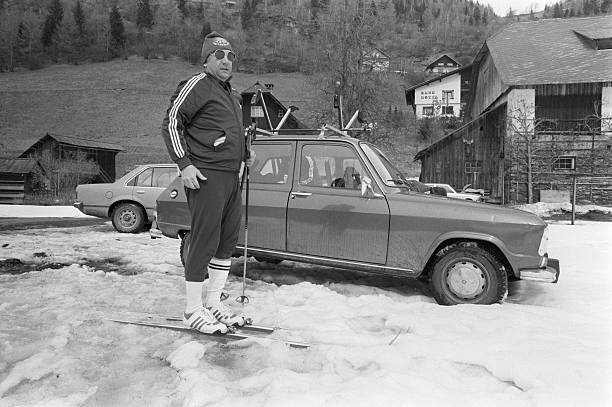
Korchnoi loved cross-country skiing, well into his elderly years. He would have a bad fall, and spend the next month in a leg cast (while still playing tournaments, nothing would deter him). Yet when his friends gently told him that he should take it easy to preserve his health, he would be out skiing again in no time.
I believe this fundamental stubbornness comes from necessity on the chess board. The same way chess demands us to be optimists (as Fischer said), it also requires us to be adamant in our chess desires, and adamant in crushing our opponent’s will. As Kasparov shows in the next game, the more our opponents don’t want it, the better it feels to get it anyways:
https://lichess.org/study/uvMx2nRw/SOJEmqfl
Elmar does everything in his power to prevent …c5 and stop the bishop on b7 from coming to life. His queen is pinning b6, his rook is hitting d5, and he gave up the bishop pair just to stop this pawn break. Right? Right??
https://lichess.org/study/uvMx2nRw/uBIMv1pH#21
Wrong.
Kasparov didn’t even like the Queen’s Gambit Declined, but he couldn’t resist this idea.
Many of Kasparov’s best games feature this theme of ridiculing opponent’s intentions. Remember the famous Octopus d3 Knight game against Karpov?
By this point in 1985, I bet Kasparov hated Karpov enough that being able to play d5!?! against Karpov’s pawns on c4 and e4 was a reward in itself. Even if the idea wasn’t fully sound, breaking Karpov’s will was a stepping stone to breaking his position.
One final example from Garry is his exchange sac against Rustam, which you can see below:
https://lichess.org/study/uvMx2nRw/r403rM0F#32
White obviously wants to stop black from castling with 17.Ng5, so Garry obviously wants to do it anyways!
This reminds me of “Shankland’s Rule” which tells us to check if a move can be played anyways, even if the opponent “stopped” it.
The subtle art of being annoying
Once, I asked my strong friend IM Mark Plotkin why he’s so hard to play against, especially in blitz and rapid.
“I just take my opponent’s most comfortable move and work against it”.
Since then, I tried to apply this annoyance philosophy, not just move for move, but on a conceptual basis:
https://lichess.org/study/uvMx2nRw/XSq64IUN#46
It’s fairly clear what black wants to accomplish here conceptually. Trade the bishops with Bb7, get e5 in, hide the king, bring the rook to g8/f8, and attack our king. Once the e5 break happens, this becomes quite likely. White cannot allow this, so retreat is not an option. e5 must be held at all cost:
https://lichess.org/study/uvMx2nRw/RNAkxev9#46
Two can play that game
No matter how annoying you try to be, there will still be games that get away from you. Our opponents can be annoying too…
https://lichess.org/study/uvMx2nRw/xgQ7fBOt#55
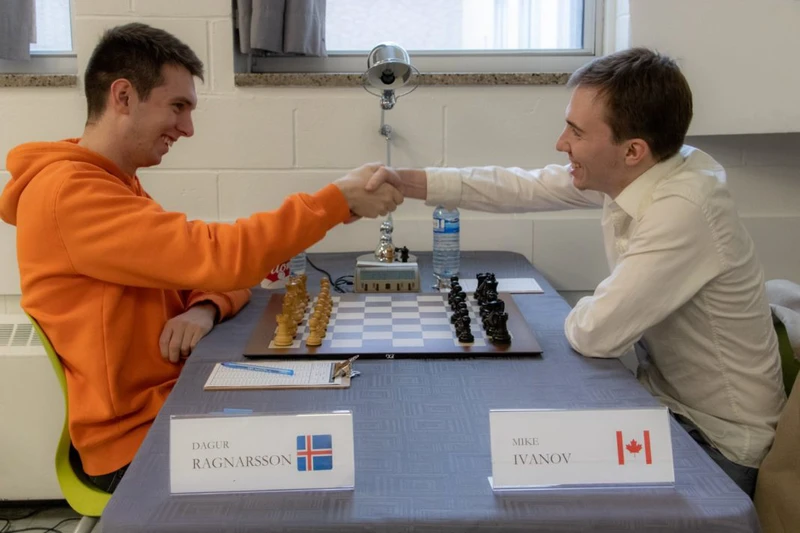
There is a story behind this game; I had messed up when planning this tournament in Montreal, booking a train ticket home just three hours after the start of the last round. This being a norm round robin tournament, I was obliged to play all rounds, especially since my opponent needed a win for his IM norm. Yet I needed to catch that train just as badly, considering school and work the next day. The solution was obvious; I had two hours to play the game, and if I couldn’t win or draw by that point, I’d have to resign. This explains my rapidfire opening play, which caught Dagur off-guard. Blitzing my moves helped psychologically, on the board, and on the clock, so by move 27 I had a completely winning position. White desperately wants to take out the minor pieces, and black desperately wants to see them rot. My move 28…Rce8 tries to work against Nce3, after which …Bxb2 is indeed winning. I was under the illusion that the bishop couldn’t move as he was guarding the b2 pawn, but Shankland’s rule was my downfall here, as 29. Be3! opened Pandora’s box.
The right way to be annoying was 28…d5! or f5! after which it’s indeed impossible for White to take out his pieces safely. Notice that we’re happy to give away the d5 pawn if it means imposing our will, it’s healthy to view material as just tools that help achieve strategic goals.
Stubborn minds over matter
Over the years, I grew less attached to material and more attached to saying “Neow!” to the opponent. 6 years after that last game was played, chess stubbornness was taken to a new level.
https://lichess.org/study/uvMx2nRw/9QA1LhfN#43
I knew that 22…b4 would be met with Nc6, followed by Ra7 which would win my queen. 26.Nc6 Ra8 Rxa8 Rxa8 Nd1 looked unclear as well. But everything pointed to a queenside expansion, and a queen wasn’t even that high a price to pay, especially considering the pawn we get on b2. The second decision is after 27.e5:
https://lichess.org/study/uvMx2nRw/9QA1LhfN#53
If we take on e5 with the bishop, 27…Bxe5 Nxe5 Rxe5 Qb3 isn’t fully clear as we lost our best piece. Likewise, taking with the pawn allows them to block up the bishop and generate counterplay with their d-pawn in the future. So if it costs us another exchange to keep our beautiful bishop guarding the pawn on b2 (which they must hate so much at this point), then so be it!
Attacking Stubbornness
Once, when Spassky was analyzing a game with Tal, they looked at a fascinating yet speculative double piece sac.
“Such things cannot work” remarked Spassky.
“I know, but I still want it to” responded Tal.
In his better attacking games, Tal would often bring pieces into enemy territory as if to say, come and get me!
It would be hard to play around such ‘imposters’ but taking the bait would lead to sacrificial attacks! Rarely did Tal’s imposters retreat.
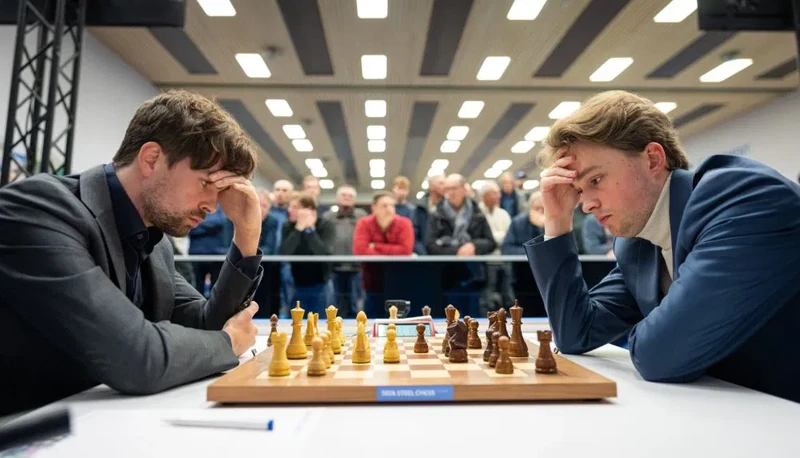
The best attackers of today seemed to have learned that lesson, as Jorden Van Foreest demonstrated in Tata Steel:
https://lichess.org/study/uvMx2nRw/KLtzFDlI#28
Weaker players would retreat such a gorgeous knight with a heavy sigh, allowing black to castle and get out of the woods.
Yet strong attackers would find a way to avoid retreating, which in this case means exploding the center!
Long before Tal, grandmasters demonstrated that the fight for initiative requires resolve, as any retreat hands over the torch to your opponent. Look no further than Fischer’s game of the century and …Be6! which is christened the move of the century. Yet here is my favourite ‘stubborn’ move of all time:
https://lichess.org/study/uvMx2nRw/KF4psqmw#34
Black is dreaming about kicking our knight away, pushing their pawn to d4, and dominating our b2 bishop while energizing their own on b7. Sorry, wasn’t meant to be! 18. e3 is a conceptual game changer, telling black we’d rather lose the knight than retreat it, and they will never get d4 in now! Shamkovich kept the initiative, and won the game on those juicy dark squares. Who knew “stubborn” could look so beautiful…
Funny story about stubbornness
In 2024, I played in the Lindroth Memorial taking place in Nassau, Bahamas. For starters, I should point out that the resorts and beaches are fabulous, but I’m not rich enough for them yet 🙂 I rented an Airbnb 35 minutes away from the tournament hall, since there weren’t many alternatives. At first, I tried to walk the whole way, which proved challenging. The heat was a problem, but not as much as the dogs I had to run past. The streets in my area had no sidewalks, which meant that everyone drove and the guard dogs weren’t used to pedestrians.
After nearly being bitten, I decided to try my luck with the local electric scooters, which were indeed faster than the dogs. On my first attempt, there was heavy rainfall, and the streets were flooded. I was relieved to find sidewalks which were relatively dry, until something strange happened. Out of little holes in the grass, crabs emerged on the sidewalk! I was literally stuck between crabs and a wet place, but chess players are more stubborn than crabs…On the next day I looked for a detour to avoid the crab-street, and found an excellently paved road which looked like a shortcut. The security guards weren’t happy with me and told me to turn my scooter around, as I was crossing the Government House where the Governor-General lived. Eventually, I resorted to walking my scooter through grass, much to the amusement of the cars driving by. In the end, I earned 1 rating point on the trip and saved a good amount in taxi fares 🙂